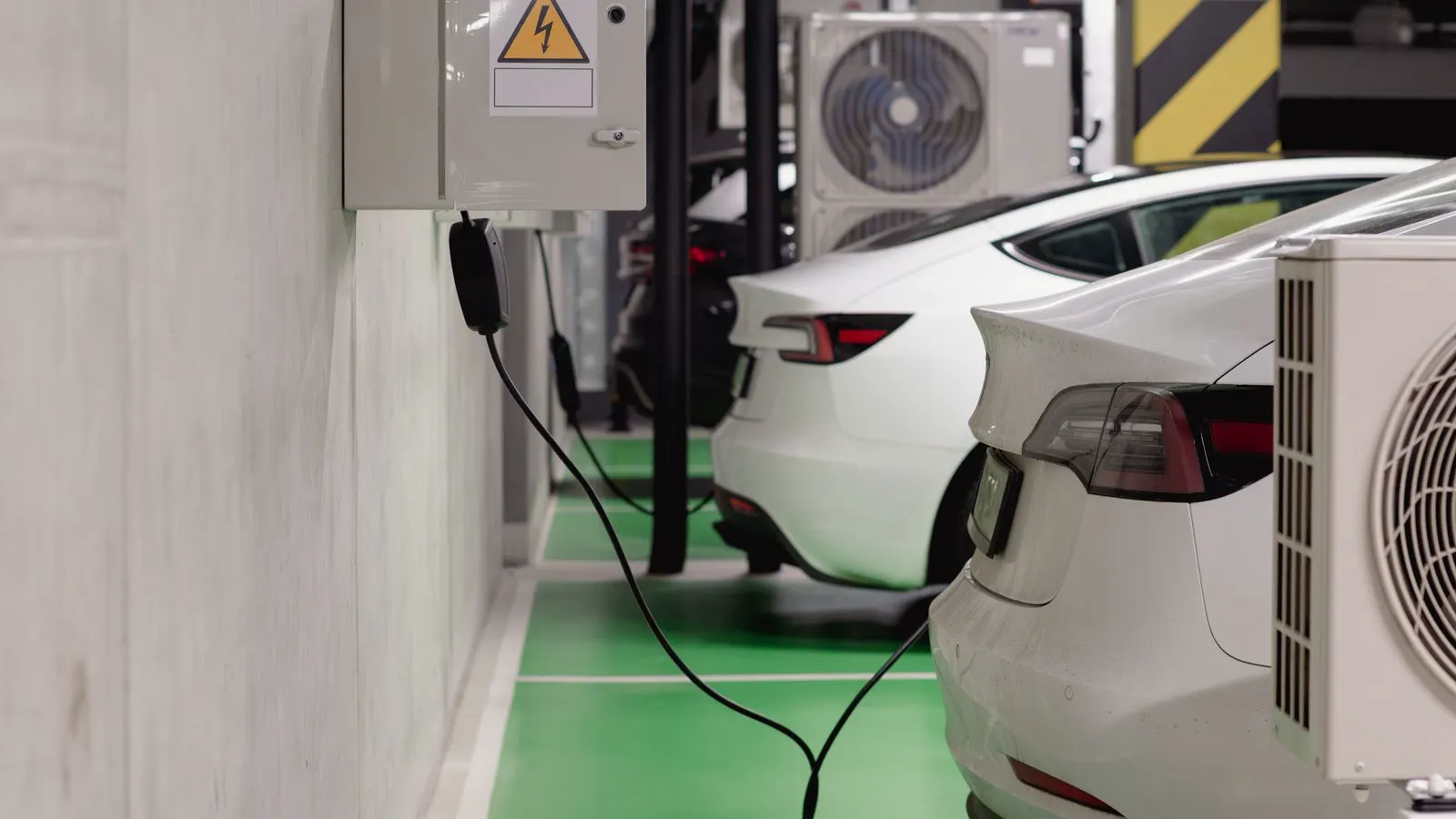
AC vs DC charging infrastructure differs significantly in capital cost and electrical load. AC is cheaper to install but slower to charge, while DC costs more upfront but handles high-speed charging without major grid upgrades.
- AC chargers cost less to buy but often require longer charging times for full battery replenishment.
- DC fast chargers reduce queue times and maximize utilization but demand heavier electrical connections.
- Site load calculations must account for simultaneous charging events, not just individual charger ratings.
- Hybrid deployments allow businesses to balance capital expenditure with customer expectations for speed.
What drives the cost difference between AC and DC?
The primary cost driver is the power supply connection. AC chargers typically connect to standard three-phase power or single-phase power, depending on the unit rating. They use an on-board converter inside the vehicle to transform the alternating current into direct current for the battery. DC fast chargers bypass the vehicle converter entirely. They deliver high-voltage direct current directly to the battery pack.
This architectural difference changes the electrical infrastructure requirements. A site deploying AC chargers can often use existing three-phase circuits if the load allows. A site deploying DC chargers often requires dedicated feeders, larger breakers, and sometimes a new transformer to handle the sustained high current draw. The cost of these grid upgrades usually exceeds the cost of the chargers themselves.
How does AC vs DC cost analysis break down?
When evaluating AC vs DC cost analysis, you must separate capital expenditure from operational expenditure. AC hardware units generally carry a lower price tag than their DC counterparts. A standard AC unit costs a fraction of a DC fast charger. However, the site preparation costs can narrow this gap.
If a site already has robust three-phase power, the AC option remains the most economical path. The installation involves mounting, wiring, and connecting to existing breakers. If the site lacks sufficient capacity, the utility upgrade cost for AC is still lower than for DC. The DC option requires heavier service. This includes larger main switchboards, thicker copper or aluminum cabling, and higher amperage breakers.
Operational costs also shift. AC charging is slower. A vehicle may spend two to four hours on an AC charger to reach a full charge. A vehicle on a DC fast charger can reach 80 percent in under an hour. For a fleet, this difference reduces the number of chargers needed to maintain uptime. For a public site, faster turnover increases revenue per square meter.
What does a charging load comparison reveal about grid impact?
A charging load comparison focuses on amperage and power consumption. AC chargers pull power in a controlled manner. They often have power management features that limit draw based on the vehicle battery state of charge. DC chargers pull high amperage rapidly during the initial charging phase. The load profile differs.
Consider a site with ten AC chargers rated at 22 kilowatts each. The theoretical maximum load is 220 kilowatts. In practice, simultaneous full load is rare. A site with two DC chargers rated at 150 kilowatts each has a theoretical maximum of 300 kilowatts. However, the instantaneous draw during fast charging is higher. The grid connection must support peak demand, not just average usage.
The load impact on the transformer is critical. Transformers have thermal limits. Adding DC fast chargers can push a transformer near its capacity threshold. This may require a larger transformer or a power factor correction system. AC chargers, with their lower peak draw, are less likely to trigger these issues. The electrical engineer must model the simultaneous charging scenarios to determine the required service level.
When should you choose AC infrastructure?
| Option | Best for | Limitations |
|---|---|---|
| AC Level 2 | Residential, office parking, short daily drives | Slow charging speed for long trips |
| AC Level 1 | Basic utility, low usage sites | Very slow recharge times |
| DC Fast | High-traffic public sites, fleet hubs, long distances | High upfront cost, high grid load |
| Hybrid Site | Mixed user base, phased rollout | Complex load management required |
Choose AC infrastructure when the use case involves short daily commutes or overnight parking. A corporate office park or a residential apartment complex benefits from AC chargers. The vehicles are charged during work hours or overnight. The user does not need to wait while they shop or work. The slower speed is acceptable because the charging window is long.
AC is also the better choice when the grid connection is limited. If the site has a small transformer or a long service drop from the substation, adding DC fast chargers may be impossible without expensive upgrades. AC chargers fit into existing electrical infrastructure more easily. They are also simpler to install. Fewer components mean fewer points of failure and lower maintenance costs.
When should you choose DC infrastructure?
DC infrastructure is the standard for highway corridors and high-traffic public hubs. If a vehicle driver has a long trip ahead, they need to charge quickly. The wait time must be short. A DC fast charger allows a driver to plug in, use the restroom, and drive on. An AC charger would require a two-hour wait, which is impractical for a highway stop.
Fleet operators also favor DC infrastructure when vehicle utilization is high. A delivery van that needs to be ready by 6:00 AM must be charged quickly. AC charging might not be fast enough to replenish the battery from 10 percent to 100 percent in the overnight window. DC charging provides the necessary speed to keep the fleet moving.
The cost of DC infrastructure is higher, but the return on investment can be stronger. Higher throughput means more revenue per charger. For a public site, the ability to serve more vehicles in a smaller area justifies the higher capital cost. The grid load is higher, but the utility connection is sized for that specific high demand.
How do you plan the electrical load?
Infrastructure planning requires a clear understanding of the site’s electrical capacity. Start with the service entry. Check the main transformer rating and the main breaker size. If the site has a 400 amp service, the total load must stay below that limit. Add the base load of the building to the charging load.
Use a demand factor. Not all chargers operate at full power at the same time. AC chargers have a lower demand factor. DC chargers have a higher demand factor. The engineer models the peak scenario. For example, if there are four DC chargers, what is the probability that all four are charging at full power simultaneously? The design should handle the peak event.
Cable sizing is another factor. Longer cable runs require larger conductors to reduce voltage drop. This increases material costs. DC chargers pull more current, so the cable size is larger. The cost of copper or aluminum rises with diameter. This is a hidden cost that often surprises project managers.
How do you compare the total cost of ownership?
Total cost of ownership includes purchase price, installation, maintenance, and energy costs. AC chargers have lower purchase and installation costs. They are also easier to maintain. The on-board converter in the vehicle handles the heavy lifting. The AC charger is essentially a regulated power source. DC chargers have onboard power electronics. These components degrade over time. The rectifier modules and cooling systems require more attention.
Energy costs are similar per kilowatt-hour, but the charging efficiency differs. AC charging involves a conversion inside the vehicle. DC charging involves a conversion inside the charger. The losses are comparable, but the DC charger may have better power factor control. This can reduce the demand charges from the utility if the site is billed on demand.
Maintenance schedules differ. AC chargers have fewer moving parts. DC chargers have complex power electronics. The cooling fans and filters in DC chargers need regular cleaning. The cost of maintenance over ten years can add up. Factor this into the AC vs DC cost analysis.
What is the final recommendation?
There is no single best option. The right choice depends on the site’s specific needs. For a residential or office site, AC is the logical choice. It is cheaper, easier to install, and fits the user behavior. For a highway stop or a high-utilization fleet, DC is the logical choice. It meets the speed requirements and maximizes revenue.
A hybrid approach is often the most practical. Install AC chargers for general use and DC fast chargers for quick top-ups. This balances cost and performance. The site provides the speed that drivers expect for long trips while keeping the base infrastructure affordable. The load management system must handle both types of chargers. The utility connection must be sized for the combined peak load.
Review the site’s electrical capacity before committing to a plan. If the grid connection is weak, start with AC. If the site has a strong connection, consider DC. The goal is to match the charging speed to the user’s need without overpaying for unused capacity. The AC vs DC charging infrastructure decision is about matching the electrical reality of the site with the operational needs of the users.
Frequently asked questions
Is AC charging always cheaper than DC charging?
AC chargers have a lower purchase price, but the installation cost depends on the existing grid capacity. If the site needs a major electrical upgrade, the difference in cost may narrow.
How much faster is DC charging compared to AC?
DC fast charging can reach 80 percent of battery capacity in under an hour. AC charging typically takes two to four hours for a full charge, depending on the unit rating and battery size.
Can AC and DC chargers be used at the same site?
Yes, a hybrid site is common. AC chargers handle general use, and DC chargers handle quick top-ups. The electrical load management system must support both.
What is the main downside of DC fast charging?
The high electrical load can strain the grid connection. This may require a larger transformer and thicker cables, which increases the upfront cost of the infrastructure.
How does the vehicle battery affect the charging speed?
The battery state of charge and temperature affect the charging speed. Both AC and DC chargers reduce the power delivery as the battery fills to protect the cells.